

Lisette Espín-Noboa has been a PostDoc at the Complexity Science Hub since January 2022.
Before joining CSH, Lisette did her PhD and was a research assistant at the Computational Social Science department at GESIS Leibniz Institute for the Social Sciences. For her doctoral thesis, she investigated the effects of network structure on ranking, network inference, and human navigation.
Lisette’s research interests lie at the intersection between computational social science, network science, and applied machine learning. As part of Fariba Karimi’s team, Lisette will work on an understanding of the extent to which the structure of networks biases the outcomes of network-based ranking and recommendation algorithms. One goal is to propose fairer outcomes with or without algorithm interventions. She will also use high resolution poverty maps using multimodal data (e.g., satellite images and mobility networks) in order to understand the limitations of data and propose interventions (e.g., when data is missing) to accurately predict wealth within and across countries.
Lisette is also a PostDoc at the Department of Network and Data Science at the Central European University (CEU).
Related
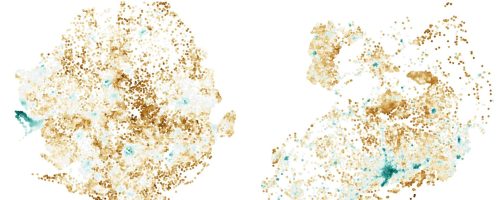



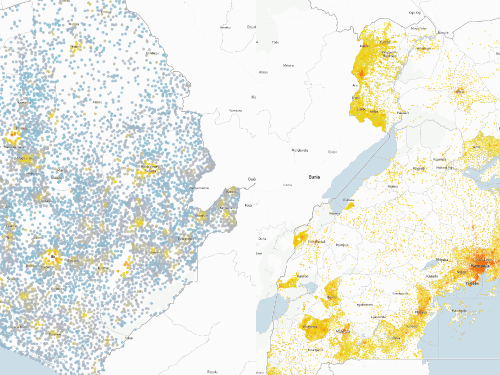
Explore the inferred wealth in Sierra Leone and Uganda from multiple machine learning models
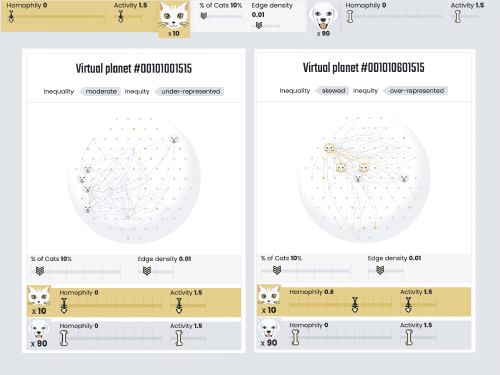
Explore how algorithms work on different types of networks, starting from explaning the essential components and leading to a more advanced explorable dashboard.
Signup
| Cookie | Duration | Description |
|---|---|---|
| cookielawinfo-checkbox-analytics | 1 year | Set by the GDPR Cookie Consent plugin, this cookie records the user consent for the cookies in the "Analytics" category. |
| cookielawinfo-checkbox-functional | 1 year | The GDPR Cookie Consent plugin sets the cookie to record the user consent for the cookies in the category "Functional". |
| cookielawinfo-checkbox-necessary | 1 year | Set by the GDPR Cookie Consent plugin, this cookie records the user consent for the cookies in the "Necessary" category. |
| CookieLawInfoConsent | 1 year | CookieYes sets this cookie to record the default button state of the corresponding category and the status of CCPA. It works only in coordination with the primary cookie. |
| PHPSESSID | session | This cookie is native to PHP applications. The cookie stores and identifies a user's unique session ID to manage user sessions on the website. The cookie is a session cookie and will be deleted when all the browser windows are closed. |
| viewed_cookie_policy | 1 year | The GDPR Cookie Consent plugin sets the cookie to store whether or not the user has consented to use cookies. It does not store any personal data. |
| Cookie | Duration | Description |
|---|---|---|
| mec_cart | 1 month | Provides functionality for our ticket shop |
| VISITOR_INFO1_LIVE | 6 months | YouTube sets this cookie to measure bandwidth, determining whether the user gets the new or old player interface. |
| VISITOR_PRIVACY_METADATA | 6 months | YouTube sets this cookie to store the user's cookie consent state for the current domain. |
| YSC | session | Youtube sets this cookie to track the views of embedded videos on Youtube pages. |
| yt-remote-connected-devices | never | YouTube sets this cookie to store the user's video preferences using embedded YouTube videos. |
| yt-remote-device-id | never | YouTube sets this cookie to store the user's video preferences using embedded YouTube videos. |
| yt.innertube::nextId | never | YouTube sets this cookie to register a unique ID to store data on what videos from YouTube the user has seen. |
| yt.innertube::requests | never | YouTube sets this cookie to register a unique ID to store data on what videos from YouTube the user has seen. |
| Cookie | Duration | Description |
|---|---|---|
| _ga | 1 year | Google Analytics sets this cookie to calculate visitor, session and campaign data and track site usage for the site's analytics report. The cookie stores information anonymously and assigns a randomly generated number to recognise unique visitors. |
| _ga_* | 1 year | Google Analytics sets this cookie to store and count page views. |
| _gat_gtag_UA_* | 1 min | Google Analytics sets this cookie to store a unique user ID. |
| _gid | 1 day | Google Analytics sets this cookie to store information on how visitors use a website while also creating an analytics report of the website's performance. Some of the collected data includes the number of visitors, their source, and the pages they visit anonymously. |