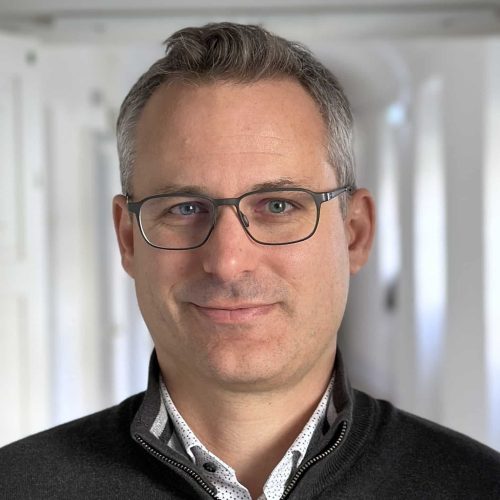
This year, the Complexity Science Hub celebrates its 10th anniversary. Throughout our anniversary year, we’re spotlighting one research topic every month. In September, it’s Crime in the Digital Age. In this interview, group leader Bernhard Haslhofer shares a personal take.
If you had to explain what your group does to someone at a dinner party, what would you say?
We try to understand how the (illegal) crypto-money flows.
What's the tangled part of this problem that makes it so hard to crack?
Cybercrime has become one of the most pressing societal challenges of our time. Criminal actors adopt emerging technologies faster than most institutions can respond, and they operate across borders and jurisdictions.
The tricky part is that what looks like many separate crimes can actually be part of the same network. If you investigate each case on its own, you may keep chasing individual incidents without seeing the bigger picture. The challenge is to find the connections between cases — and, ultimately, the key nodes that link many of them together. That’s where you can potentially have a much bigger impact.
However, no single discipline sees the full picture. Cybercrime spans technical infrastructure, economic incentives, and human behavior. Countering it therefore requires an interdisciplinary approach and a joint effort between law enforcement, industry, and academia. It also requires us to think globally, because criminal networks are not stopped by national borders.
What are you working on right now that you can't stop thinking about?
What pulled you into this field in the first place?
Curiosity.
What is complexity, to you?
Has your research ever changed your mind about something you were sure of?
What does a typical workday look like for you?
What keeps you going despite all challenges?
When you're stuck – what do you do?
What's the thing people get wrong about your field that bugs you?
Is there a tool, model, or dataset you'd be lost without?
What would you love to have changed five years from now?
Find more information on this research topic here.